Recipe Summary
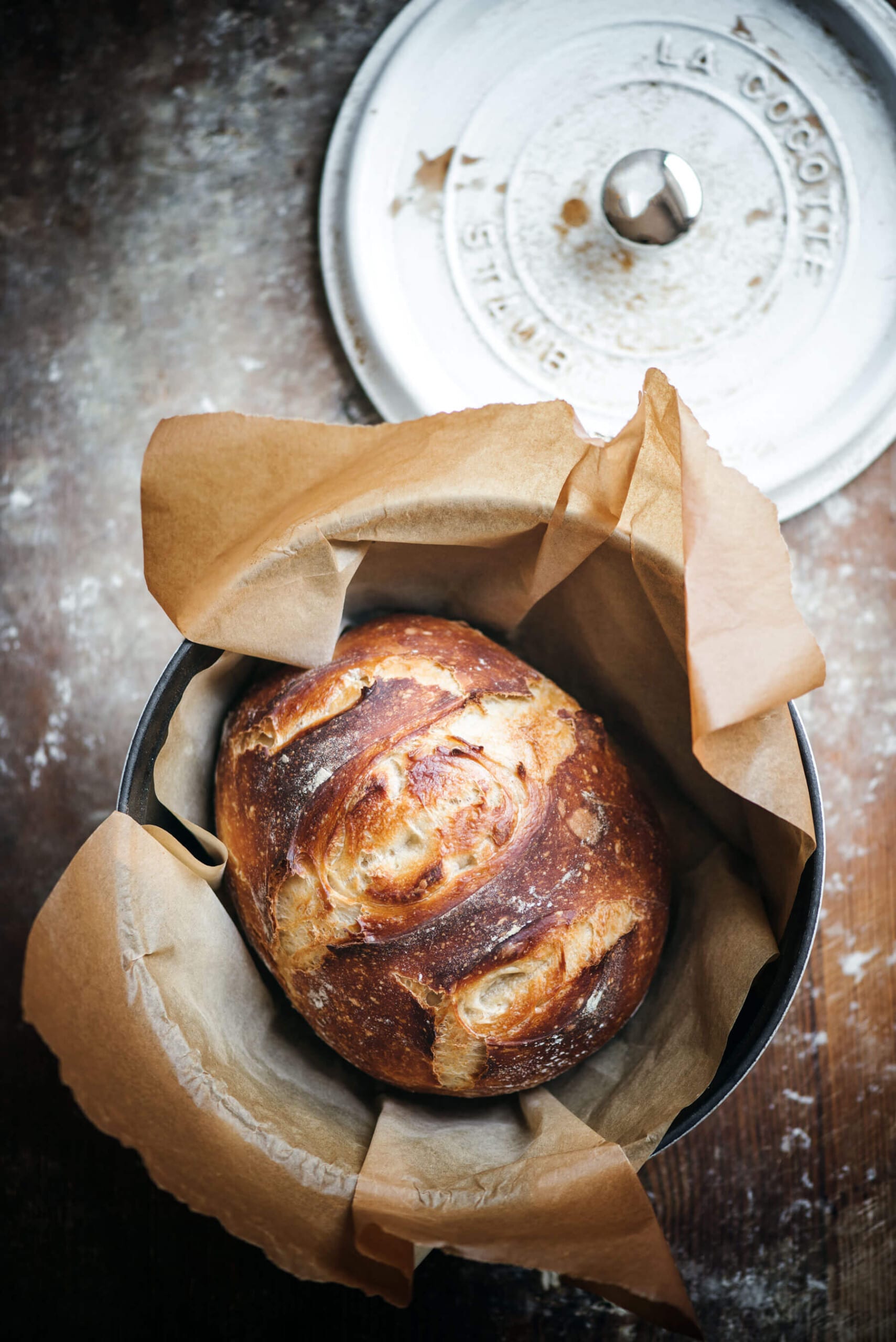
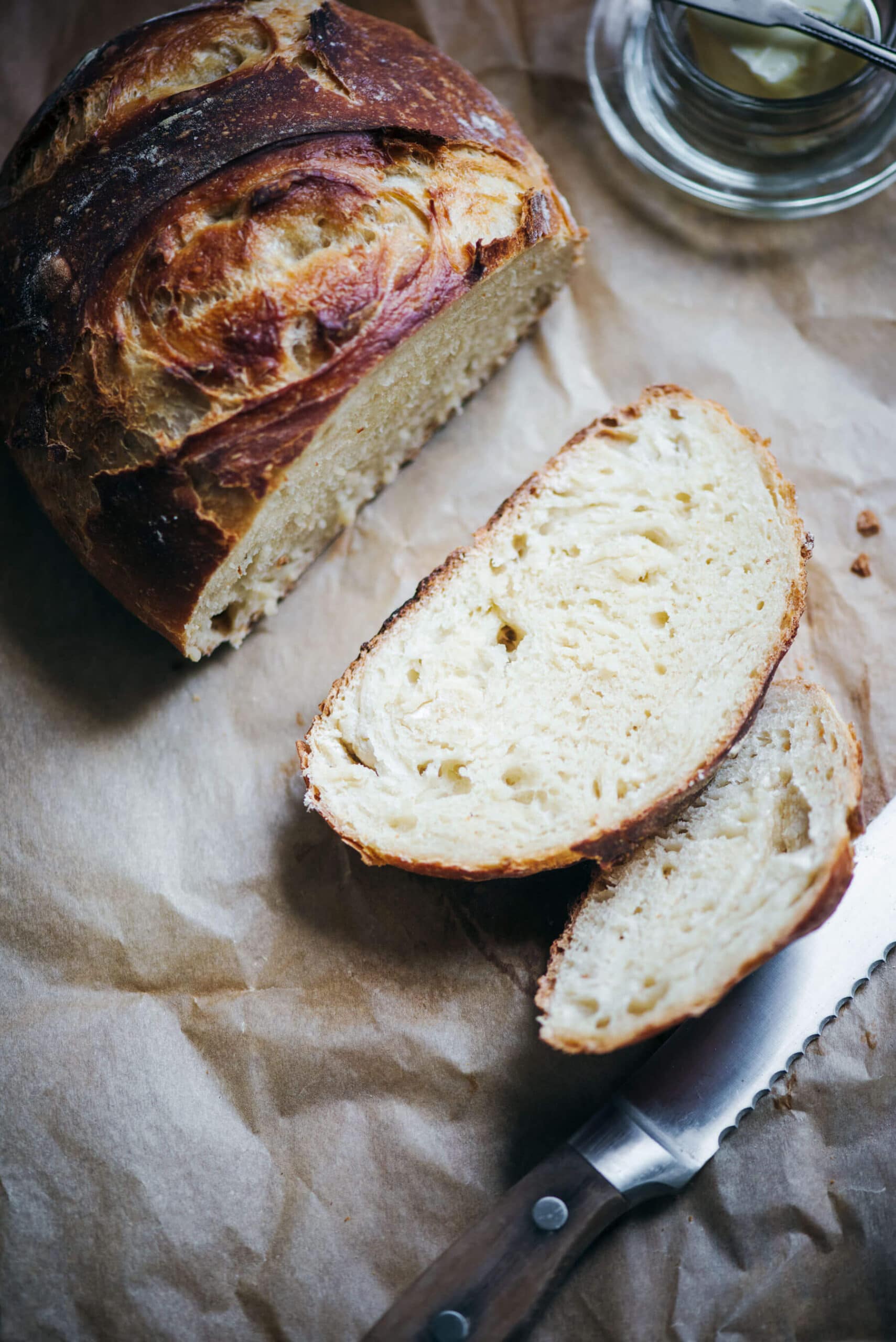
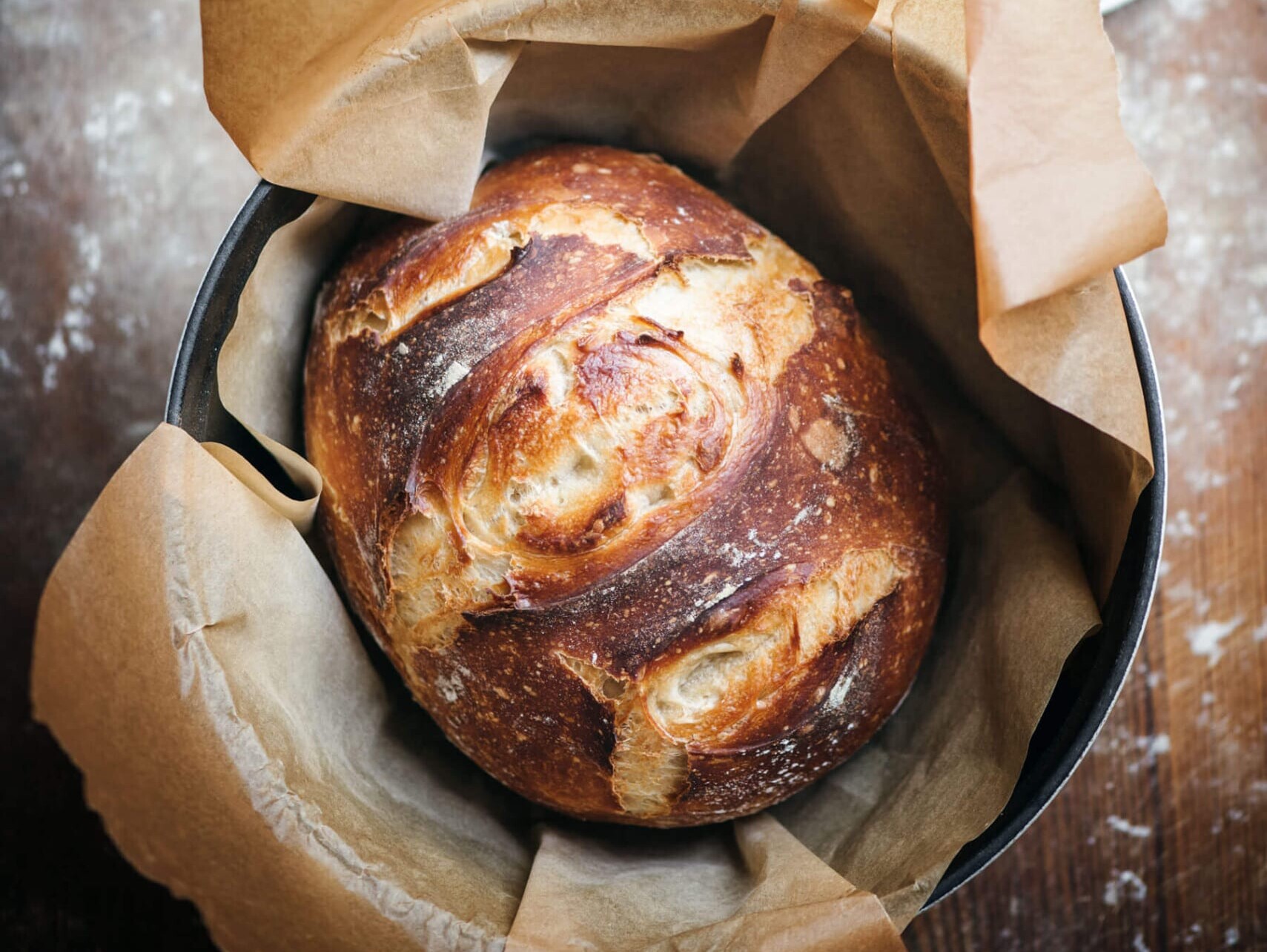
Learn how to make this easy bread recipe, Dutch Oven Bread. It has all of the flavors of artisan bread, with the wafting aroma of fresh baked bread, and that crackly crust and beautifully baked center.
There is something about the smell of fresh bread that turns an ordinary afternoon into a good one — and this dutch oven bread is the easiest way to fill your kitchen with it. It bakes up with a deeply golden, crackly crust and a soft, chewy center, no bread-making experience required.
This is a no-knead recipe, which means the dough does the hard work for you. You stir it together, let it rise, and the Dutch oven turns it into a bakery-style loaf. Bake it the same day, or stash the dough in the fridge for up to two weeks and bake fresh whenever the mood strikes.
❤️ Why You’ll Love This Dutch Oven Bread
- No kneading. Stir it together with a spoon and walk away — the long rise builds all the flavor and structure for you.
- Bakery-quality crust. The Dutch oven traps steam and delivers the crackly, deeply golden crust most home ovens cannot.
- Make-ahead friendly. The dough keeps in the fridge for up to two weeks, so fresh bread is always within reach.
- Four ingredients. Flour, water, yeast, salt. That is the entire list.
Why Bake Bread in a Dutch Oven?
The secret is steam, and a Dutch oven traps it perfectly. As the wet dough heats up inside the covered pot, it releases moisture with nowhere to go, so it circulates around the loaf during the first part of the bake. That is exactly what a professional stone hearth oven does, and it is what gives artisan bread its crackly, deeply golden crust.
Once the lid comes off for the final stretch, the steam escapes and the crust sets. The heavy pot and tight-fitting lid do the work that a standard home oven simply cannot do on its own.
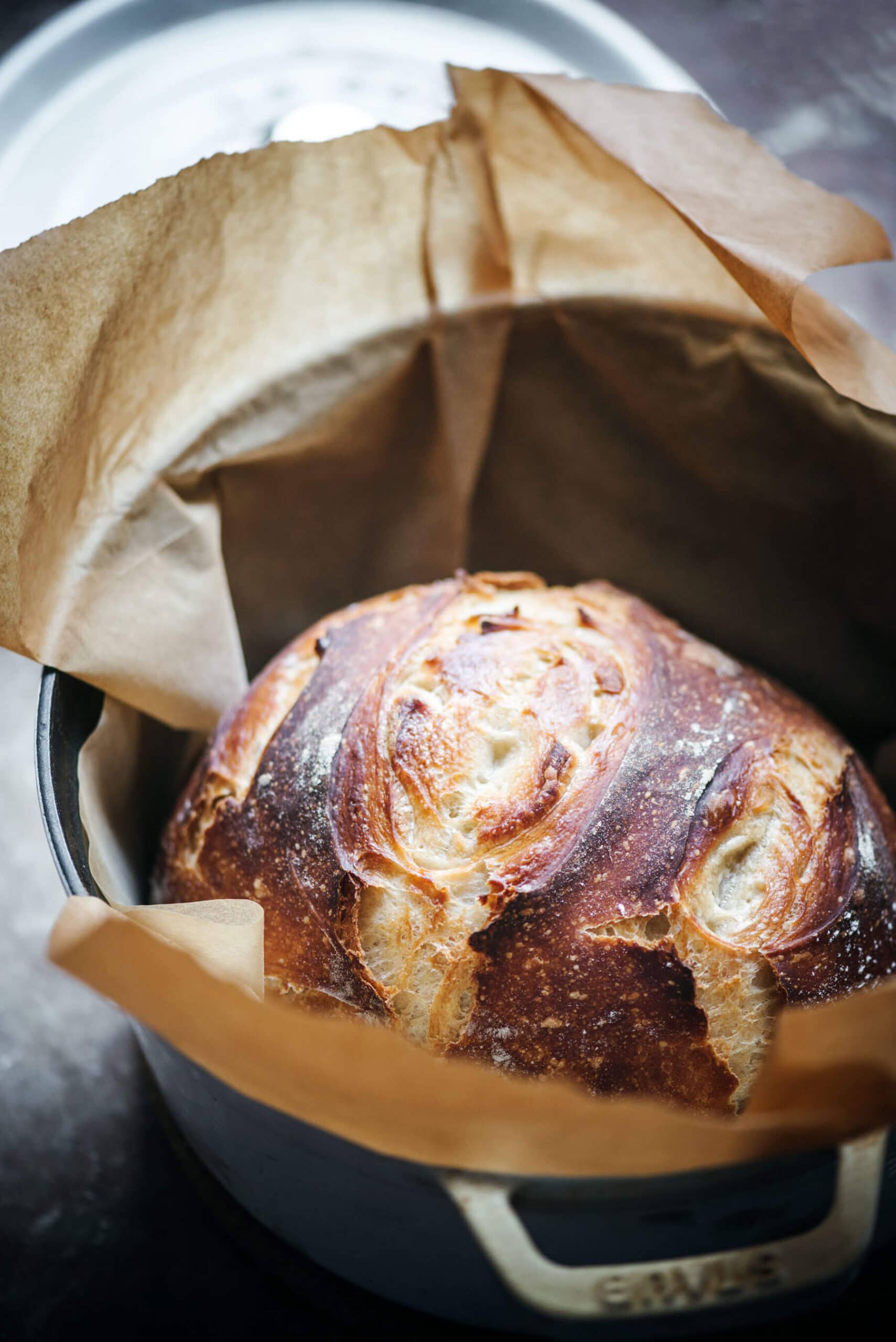
The Best Dutch Oven for Bread
Size matters here. A 4 to 7 quart Dutch oven is the sweet spot for a standard loaf. Too small and the dough has no room to expand; too large and it spreads out flat instead of rising tall.
Enameled vs. bare cast iron. Both work well. Enameled cast iron, like a Le Creuset or Staub, is easy to maintain, and the light interior makes it simple to monitor the bottom of the loaf. Bare cast iron holds heat just as well and costs less, but it needs a little more seasoning care.
One thing to check: make sure the lid fits tightly and the whole pot, knob included, is oven safe to at least 450°F. Some lids have plastic knobs that cannot take that heat — swap in a metal one before you bake.
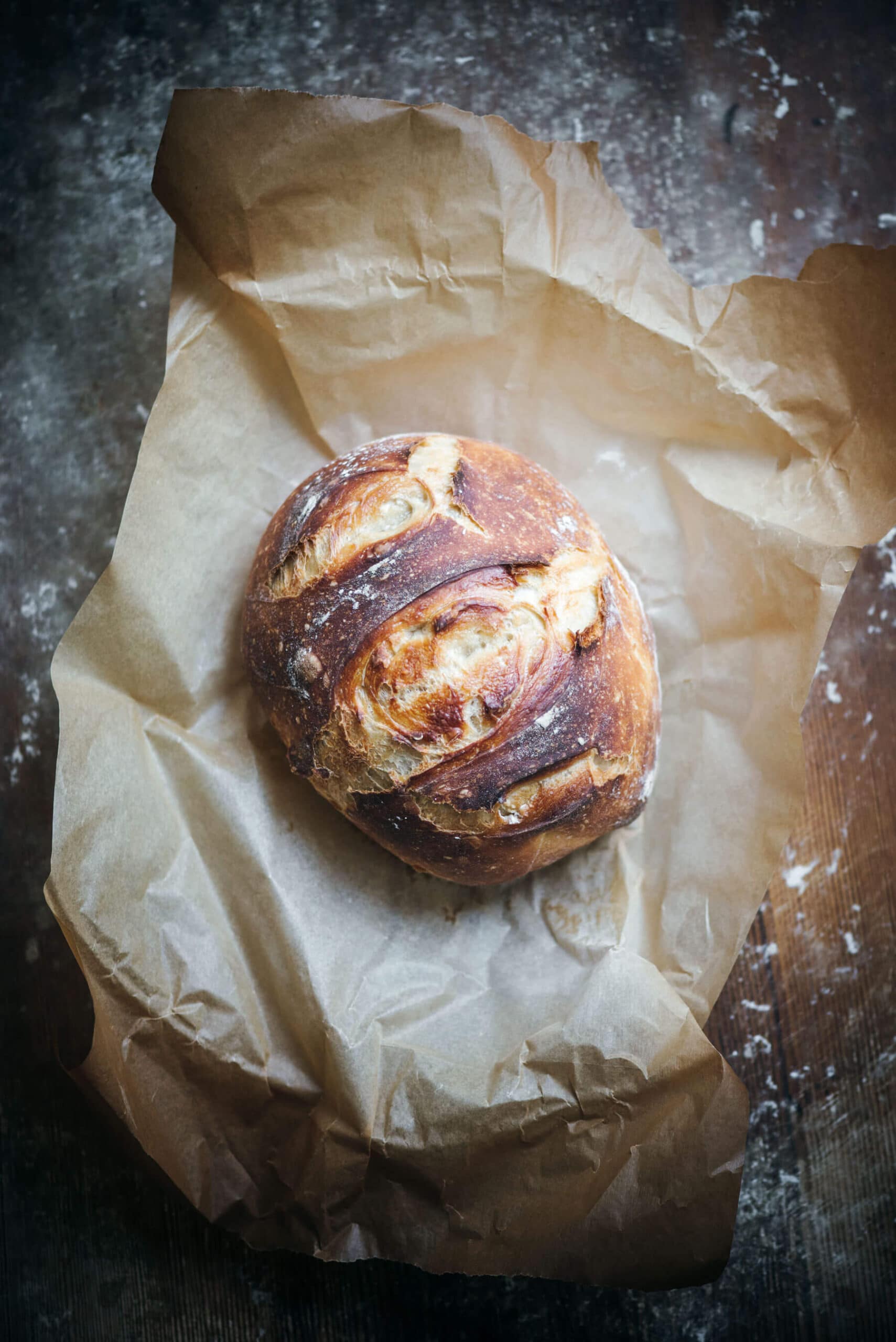
What You’ll Need
Here is everything that goes into this dutch oven bread — the full amounts are in the recipe card below.
- All-purpose or bread flour — either works; bread flour gives a slightly chewier crumb.
- Active dry yeast — the lift behind the loaf.
- Warm water — around 100–105°F, warm enough to wake the yeast without killing it.
- Salt — for flavor and to keep the rise in check. Do not skip it.
- Equipment: a 4–7 quart Dutch oven, a large mixing bowl, and parchment paper.
How to Make Dutch Oven Bread
Here is how it comes together — the full step-by-step is in the recipe card below.
- Mix and rise. Stir the yeast into warm water, add the flour and salt, and mix just until a sticky dough forms. Cover and let it rise 1–2 hours, or refrigerate the dough for up to two weeks.
- Shape and preheat. Turn the dough out, fold it a few times, shape it into a loaf, and score the top. While it rests, preheat your Dutch oven — empty, lid on — at 450°F.
- Bake. Lower the dough into the screaming-hot pot on parchment, cover, and bake. The lid comes off partway through so the crust can deepen and crisp.
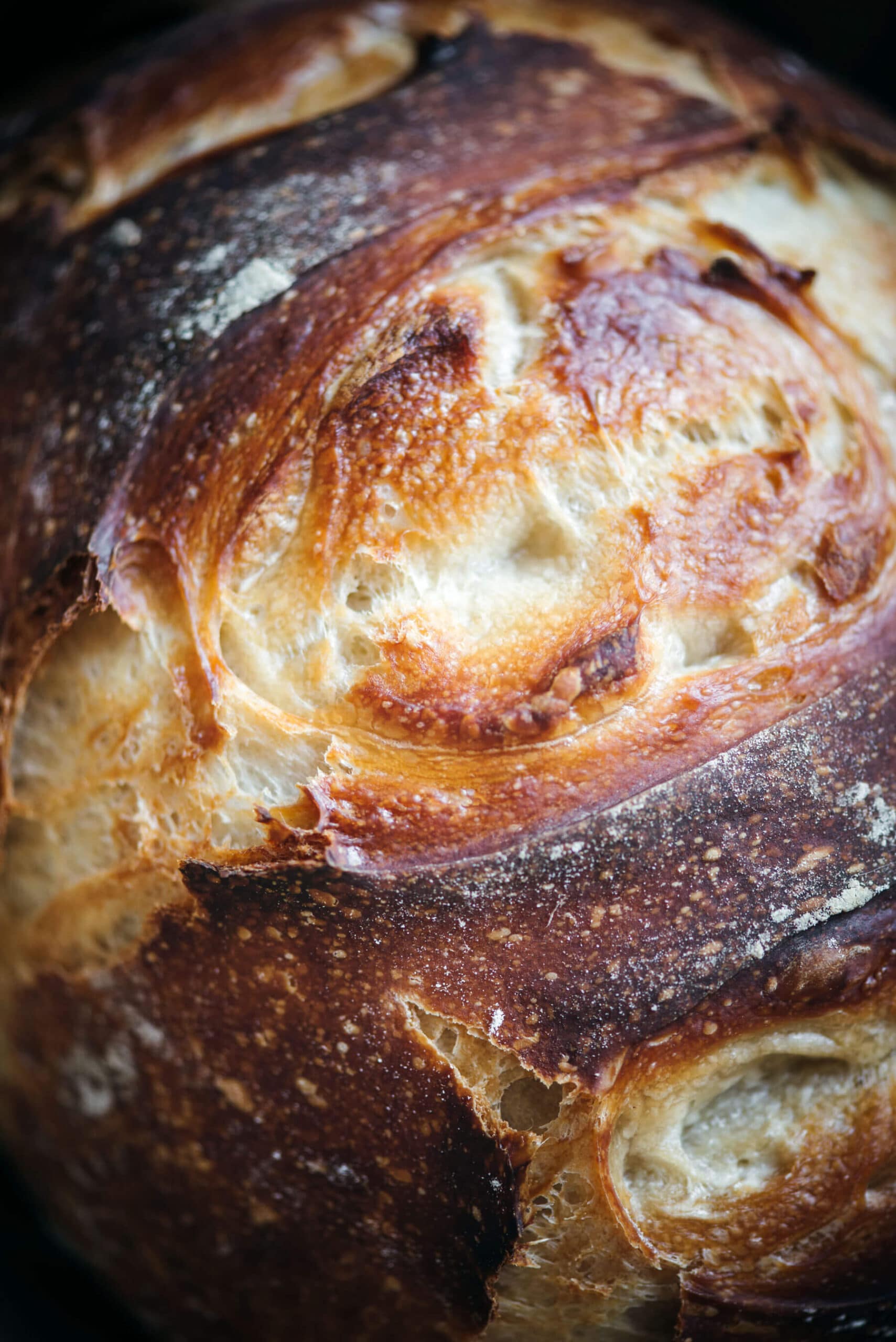
Dutch Oven Bread Tips
- Use a parchment sling. Cut the parchment large enough to hang over the sides of the pot — it lets you lower the dough in and lift the loaf out without wrestling hot cast iron.
- Preheat the pot, always. Lowering the dough into a screaming-hot Dutch oven is what gives you instant crust on the bottom. Start in a cold pot and you lose that crust.
- Score before it bakes. A sharp knife or bread lame dragged across the top gives the loaf a controlled place to expand. Skip it and the bread cracks wherever it likes.
- Do not drop the temperature. This bread bakes hot. Resist the urge to turn the oven down — the high heat is doing exactly what it should.
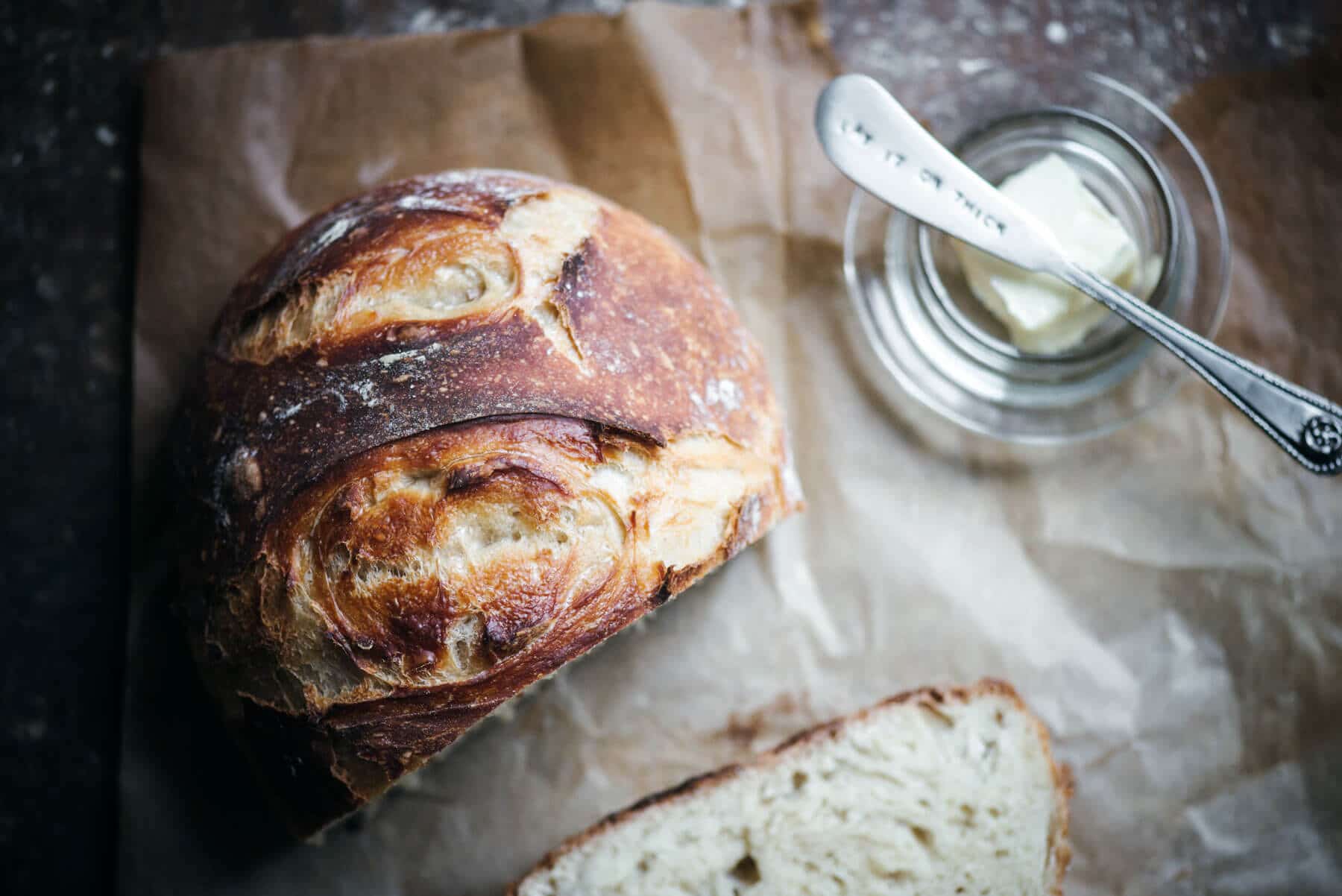
Flavor Variations
The base recipe is a blank canvas. Once you are comfortable with the process, it is easy to mix things up.
- Rosemary olive oil. Add a tablespoon of good olive oil and fold in a handful of fresh rosemary before the first rise.
- Garlic herb. Mix in roasted garlic and a blend of thyme, rosemary, and parsley. Roasting the garlic first keeps it from burning against the hot pot.
- Whole wheat. Swap up to half the flour for whole wheat for an earthier, more complex loaf. Going beyond half tends to make the bread dense.
- Seeded. Brush the top with water and press on sesame, poppy, sunflower, or caraway seeds. They toast beautifully against the hot lid.
Once you have this loaf down, our rustic white bread and skillet cornbread are easy next bakes.
What to Serve With Dutch Oven Bread
A crusty loaf like this earns its place next to almost anything. Tear it alongside soups and stews, hollow it into a bread bowl, or toast thick slices for breakfast with butter and jam. It is especially good with a bowl of smoky bacon corn chowder — that combination is hard to beat.
How to Store Dutch Oven Bread
This bread is at its absolute best the day it is baked — that crust is everything. For short-term storage, wrap the loaf in a clean kitchen towel and keep it at room temperature for 2 to 3 days. Skip plastic bags; they trap moisture and turn the crackly crust soft and chewy within hours.
For longer storage, freezing works beautifully. Cool the loaf completely, slice it, then wrap the slices tightly and freeze for up to 3 months. Thaw at room temperature, or pop slices straight into a warm oven for a few minutes — they come back surprisingly well.
Dutch Oven Bread FAQ
Can I make this in a 6-quart Dutch oven?
Yes. A 6-quart pot works fine — the loaf may spread a little wider and bake slightly shorter rather than tall, but the flavor and crust are exactly the same.
Can I halve the recipe to make just one loaf?
You can. Halve all four ingredients and bake a single loaf. Keep the oven temperature the same and start checking for doneness a few minutes early.
Why is my dough so sticky?
Sticky dough is normal and exactly what you want — a wetter dough makes a more open, tender crumb. Resist adding extra flour; just use floured hands and parchment to handle it.
Do I have to knead this bread?
No. This is a no-knead recipe. A long, slow rise does the work kneading normally would, developing the gluten gradually while you do nothing at all.
How do I know when the bread is done?
The crust should be deeply golden, and the loaf should sound hollow when you tap the bottom. If you want to be certain, the interior reads about 200–210°F.
Can I make the dough ahead of time?
Absolutely. After mixing, keep the dough loosely covered in the fridge for up to two weeks. Pull off what you need, let it come to room temperature, then shape and bake.
This loaf is especially good next to a creamy soup, and I love it with a bowl of broccoli potato soup for dipping.
If you want something faster than a loaf, these Southern biscuits still deliver that warm-from-the-oven comfort.

Dutch Oven Bread
Ingredients
Equipment
Method
- In a large bowl or the bowl of a stand mixer fitted with a dough hook, combine the yeast and warm water. Allow to rest for 5 minutes, it should become foamy.
- Add the flour all at once along with the salt to the wet ingredients, then mix with a wooden spoon or on low speed until combined (do not overmix). The dough will be sticky or slightly wet at this point, this is normal and it will come together.
- You can keep the dough in the mixing bowl, then lightly dust with flour, do not mix in. Cover with a clean kitchen towel or plastic wrap and allow to rise in a dry warm area for about 1 – 2 hours, or until the dough has risen – don’t be worried if the dough has not completely doubled in size. (At this stage, you can continue with baking in step 4, or you can place the bowl of dough loosely covered with a kitchen towel or plastic wrap in the refrigerator for up to 2 weeks).
- While the dough is still rising, after about 45 minutes, place an empty Dutch oven (with the lid on) in a cold oven and preheat to 450°F. I usually aim to preheat my oven for at least 30 minutes or up to 1 hour, this allows the Dutch oven to preheat properly.
- Once the dough has risen (at least 1 hour), tip the dough onto a lightly floured surface and sprinkle the top of the dough with a dusting of flour. Fold it over few times (8 – 10). Divide dough in half for 2 large loaves or into 4 equal portions for four mini-sized loaves, working with one portion at a time, shape into a ball, tucking edges underneath the dough.
- Using a sharp knife or bread lame, cut 2 – 3 slashes or a cross shape into the top of the loaf.
- Place parchment paper on a clean surface or in a bowl, then place the flour-dusted dough on the parchment paper, cover with a clean kitchen towel and rest for 15 minutes.
- Wearing oven gloves, carefully remove the lid of the Dutch oven, lift the parchment paper with dough and transfer it to the Dutch oven, cover it with the lid and bake for about 25 minutes for the large loaf (if making the four smaller loaves, bake for 20 minutes). Remove the lid, continue to bake for an additional 18 – 20 minutes (smaller loaves – 15 minutes), or until bread is a rich golden color and if tapped on the bottom of the loaf, it sounds hollow.
- Remove from the oven, allow the bread to rest for 15 minutes before slicing.
Nutrition
Notes
Tried this recipe?
Let us know how it was!7-Day Email Series
Seven dinners worth getting undressed for.
One lands in your inbox every morning for a week — plus the side and the drink I’d pour with it. Free.
No chef’s journey. No weird ingredients. Unsubscribe whenever.